





A standard job sheet never fits every type of job
The more types of work you do, the more a standard job sheet gets in the way. For a service issue, you want to know what caused the problem and what was replaced. For a handover, you need a signature and photos. For an inspection, you need measurements in a report that meets the required standard. Put all of that on one job sheet and your engineer ends up seeing forty fields when only eight apply. And then they stop filling them in.
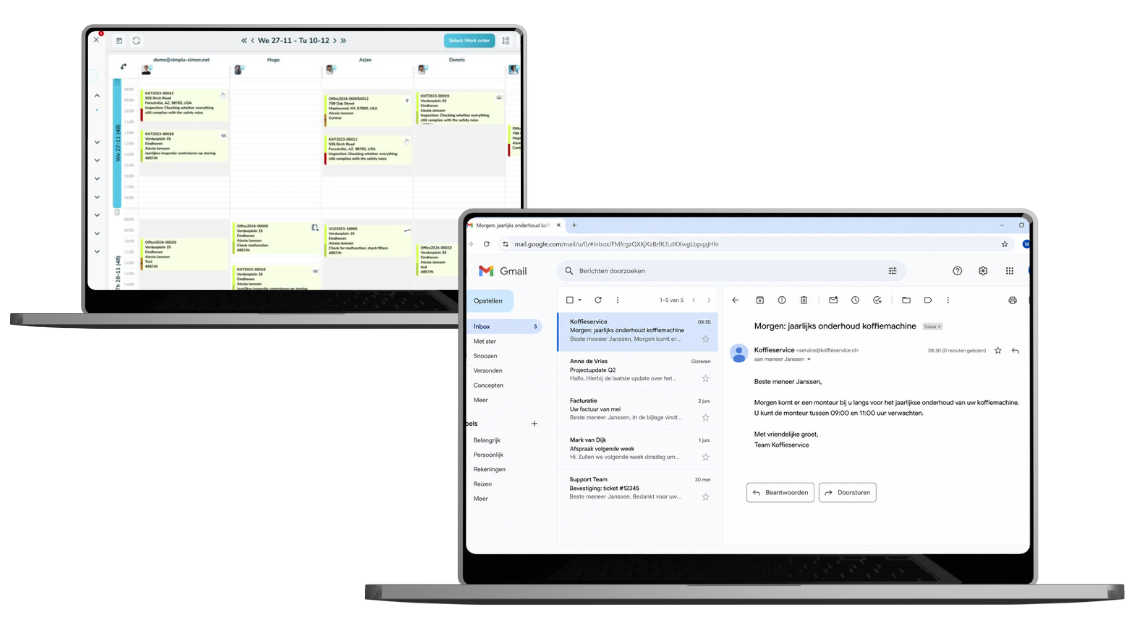
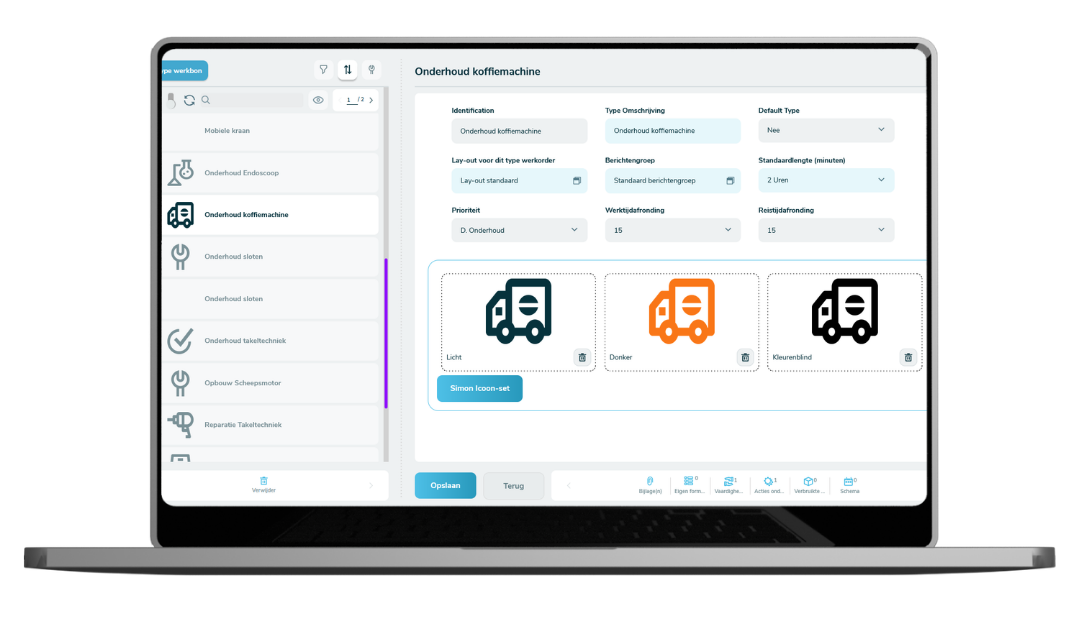
By setting up your job sheets by type, you split that one generic job sheet into the types of work you actually carry out. You can create as many types as you need: service issue, installation, periodic maintenance, inspection, handover, warranty visit or contract visit. For each type, you decide what belongs to it. If you select the “refrigerant leak” type when creating a job sheet, the leak inspection form and logbook entry are already included, and the correct PDF layout is automatically linked.
You notice the difference in two places. In the office, the person creating the job sheet no longer needs to know which attachments belong to which job, because that is already defined in the type. And in the field, your engineer only sees the questions that are relevant to that specific job, so the job sheet comes back complete and correct instead of half filled in.