


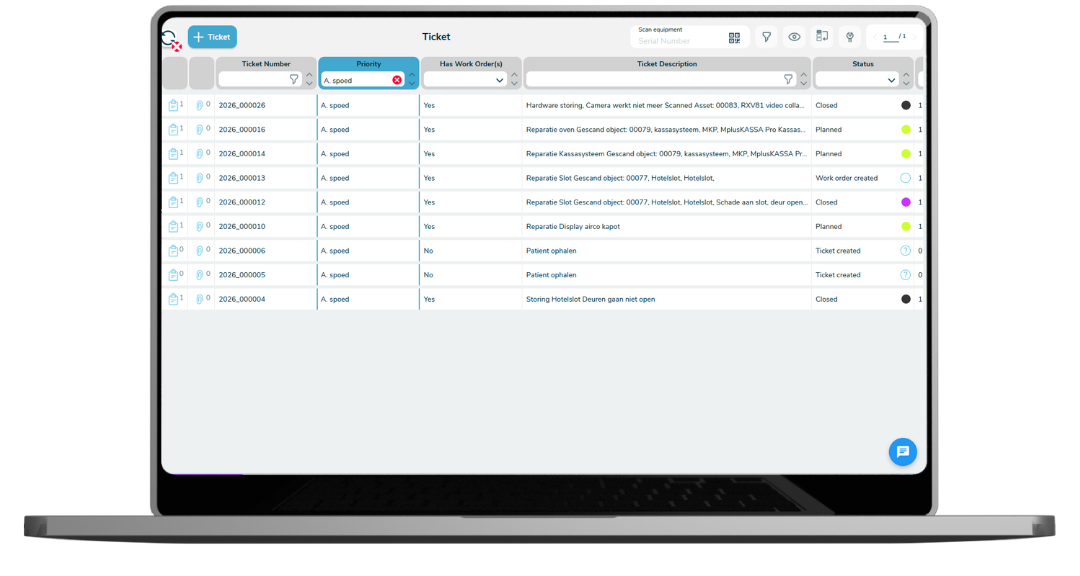
Filax enabled the Customer Portal. Now their customers submit their own service requests.



Filax enabled the Customer Portal. Now their customers submit their own service requests.

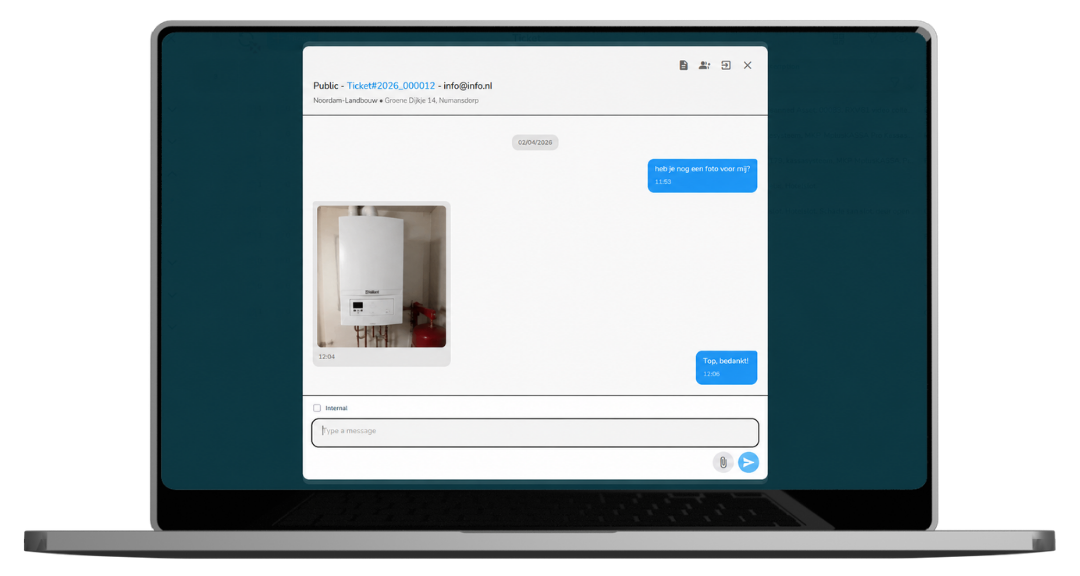
Your customer can add a photo, video or document directly to their service request. The nameplate, the error code on the display, or the exact spot where the water is coming from.
Your engineer knows what to expect before heading out. They can bring the right part instead of having to make a second trip, and they know which tools they’ll need. Every job completed in one visit saves you half a day of wasted time.
And you no longer need to call back just to find out what exactly is wrong.

When it’s time to renew the contract, you may have a customer who feels your service “could have been faster.” Without the data, all you can do is say that your experience is different. With the reporting in the portal, you can show what actually happened.
For each asset, you can see the uptime. For each service request, you can see the response time and how long it took to resolve. And across the entire period, you can see what percentage of requests were handled within the agreed SLA.
Your customer sees the same figures you do. That’s not only useful proof during a contract renewal — it also helps you justify a higher rate against a competitor whose only advantage is being cheaper.

Large customers aren’t just one person. The branch manager in Tilburg should be able to report an issue for their own location without seeing anything from the branch in Liège. The manager above them, on the other hand, wants an overview of all locations side by side, including reporting across the entire organisation.
You configure this per customer, right down to location level. You decide who can see which assets, who can create service requests, who can view job sheets and forms, and who has access to the reporting.
That way, you give larger customers the transparency they expect without showing them anything they don’t need to see.

Complete for €30 per month, per user
“Our company has been using this app for a very long time, and now with the new 3.0 version, it works even better. Thanks a lot!”
Aktie Totaalinstallateurs B.V.